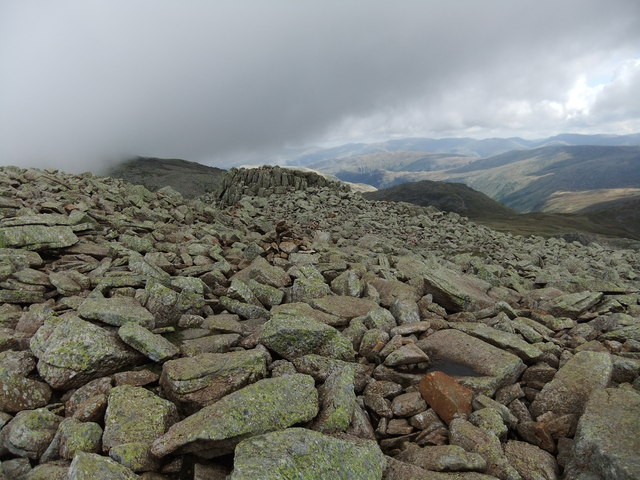
At 901m (2956ft), Blunt Top is the highest Nuttall (Deleted) and the tallest of the 60 Nuttall (Deleted)s. At this altitude, summit conditions can be severe — check the Blunt Top wind chill, freezing level and cloud base before setting out. Winter walking on Blunt Top requires full mountain equipment.
Geology: The bedrock here is Seathwaite Fell Sandstone Formation — Volcaniclastic-sandstone and volcaniclastic-breccia — rock formed from fragmented volcanic material. Age: Caradoc Series.
Planning to walk Blunt Top? Our summit weather forecast shows live conditions at 901m including wind speed, wind chill, temperature, freezing level, cloud base and rain risk. The forecast updates hourly using data from 7 weather models blended into the HILLANDGLEN ensemble — accuracy-weighted so the best-performing models have the most influence.
Key conditions to check before climbing Blunt Top: wind chill (the real temperature you'll feel on exposed ridges), freezing level (whether ice and snow are likely on the summit), cloud base (whether you'll have visibility at 901m), and wind gusts (which can be significantly stronger on exposed summits than in the valley below).
Blunt Top weather can change quickly at 901m. Valley conditions often differ from the summit — our forecast applies lapse rate adjustments to give you the actual temperature and wind at the top, not the nearest town. Check the 14-day outlook to find the best day to walk Blunt Top.
Frequently Asked Questions
How high is Blunt Top?
Blunt Top is 901 metres (2956 feet) above sea level. It is classified as a Nuttall (Deleted) in Cumberland.
What is the weather like on Blunt Top?
At 901m, Blunt Top experiences significantly harsher conditions than the valleys below. Summit temperatures are typically 6-8°C colder due to the lapse rate, winds are stronger and more exposed, and cloud cover can reduce visibility to just a few metres. Always check the summit forecast before setting out — hillandglen.com shows live wind chill, freezing level, cloud base and rain risk updated hourly.
Is Blunt Top safe to climb in winter?
Blunt Top is a serious winter mountain at 901m. Snow, ice and sub-zero wind chill are common from November to April. Full winter equipment is essential: ice axe, crampons, waterproofs, warm layers and navigation tools. Always check the freezing level and wind forecast before attempting a winter ascent.
When is the best time to climb Blunt Top?
The best months for climbing Blunt Top are typically May to September, when days are longest and weather is generally drier. Summer offers the most stable conditions and longest daylight hours. Winter ascents (November-April) are possible but require full winter mountaineering equipment and experience.
Free summit weather forecasts for over 20,000 British and Irish hills. Designed for hikers, runners, and climbers who need accurate mountain conditions — not just city weather.