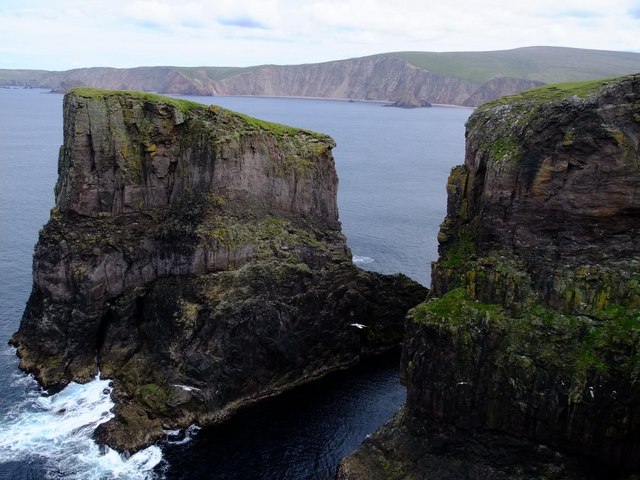
Galti Stack is a 63m (207ft) Scottish mountain classified as a Tump (30-99m), one of 2175 Tump (30-99m)s in Scotland. Check the Galti Stack weather forecast for wind, rain and visibility before your walk. Even at lower elevations, hill weather can differ significantly from the valley.
Geology: The bedrock here is Esha Ness Volcanic Formation — Pyroclastic-breccia — rock formed from explosive volcanic eruptions. Age: Mid Devonian Epoch.
Planning to walk Galti Stack? Our summit weather forecast shows live conditions at 63m including wind speed, wind chill, temperature, freezing level, cloud base and rain risk. The forecast updates hourly using data from 7 weather models blended into the HILLANDGLEN ensemble — accuracy-weighted so the best-performing models have the most influence.
Key conditions to check before climbing Galti Stack: wind chill (the real temperature you'll feel on exposed ridges), freezing level (whether ice and snow are likely on the summit), cloud base (whether you'll have visibility at 63m), and wind gusts (which can be significantly stronger on exposed summits than in the valley below).
Galti Stack weather can change quickly. Valley conditions often differ from the summit — our forecast applies lapse rate adjustments to give you the actual temperature and wind at the top, not the nearest town. Check the 14-day outlook to find the best day to walk Galti Stack.
Frequently Asked Questions
How high is Galti Stack?
Galti Stack is 63 metres (207 feet) above sea level. It is classified as a Tump (30-99m) in Scotland.
What is the weather like on Galti Stack?
Galti Stack stands at 63m, where conditions can still differ from the valley. Wind is typically stronger on the summit, and rain showers can arrive quickly in Scotland. Check the hillandglen.com forecast for live summit wind, temperature and rain risk.
Is Galti Stack suitable for beginners?
At 63m, Galti Stack is one of the more accessible hills and is popular with walkers of all abilities. However, weather can change quickly — always check the forecast and carry waterproofs. Good footwear with grip is recommended as paths can be muddy or rocky.
When is the best time to climb Galti Stack?
The best months for climbing Galti Stack are typically May to September, when days are longest and weather is generally drier. June often has the best combination of long daylight hours and settled weather, with midges at their worst in July-August. Autumn can also be excellent with clearer skies and golden light.
Free summit weather forecasts for over 20,000 British and Irish hills. Designed for hikers, runners, and climbers who need accurate mountain conditions — not just city weather.